
Part 5: AI Governance at Pace - 10 Things Enterprises Must Get Right
MM
Standardising AI Risk Taxonomy and Scoring: Why It Matters
As artificial intelligence continues to evolve and integrate into various aspects of business and daily life, the need for managing potential risks associated with AI systems has become increasingly important. Establishing a standardised AI risk taxonomy and scoring system is critical for ensuring that AI development and deployment are both safe and effective.
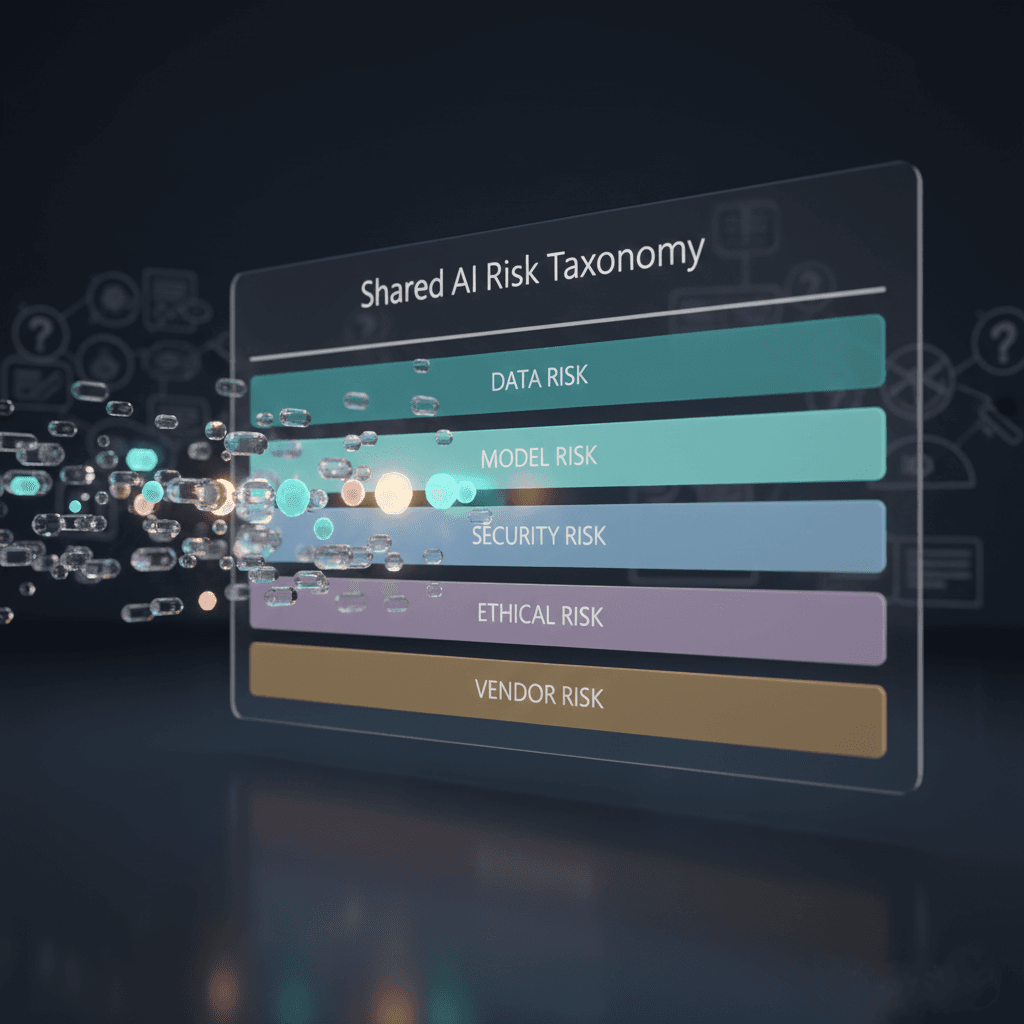
Understanding AI Risks
AI technologies, while offering numerous benefits, also come with their own set of risks. These can range from data privacy concerns to algorithmic biases and unintended autonomous system behaviors. Understanding these risks is the first step toward managing them effectively. A standardised risk taxonomy can provide a comprehensive framework to identify and categorise these risks consistently.
Without a standardised approach, the industry may struggle with inconsistencies in how risks are assessed and addressed. This can lead to vulnerabilities being overlooked or inadequately managed, putting businesses and individuals at risk.
The Importance of Standardisation
Standardising AI risk taxonomy and scoring is not just a matter of convenience, it is essential for ensuring that all stakeholders speak the same language when it comes to AI risk management. This standardisation enables organisations to:
- Compare risks across different AI systems.
- Develop more effective mitigation strategies.
- Ensure compliance with regulations.
By establishing a common understanding of risks, organisations can better collaborate on developing solutions and best practices.

Components of AI Risk Taxonomy
Developing a robust AI risk taxonomy involves several components. These include:
- Risk Identification: Recognising potential risks associated with AI systems.
- Risk Analysis: Evaluating the likelihood and impact of identified risks.
- Risk Categorisation: Classifying risks into structured categories for easier management.
These components ensure that organisations can systematically approach AI risk management in a structured and repeatable manner.
Scoring AI Risks
Once risks are identified and categorized, the next step is to score them. This involves assessing the severity and likelihood of each risk, which can then be used to prioritise mitigation efforts. A standardised scoring system ensures consistency and objectivity in how risks are perceived and addressed.

Implementing a scoring system also allows for benchmarking and tracking risk management progress over time, providing valuable insights into the effectiveness of risk mitigation strategies.
Benefits of a Standardised Approach
Adopting a standardised AI risk taxonomy and scoring system offers numerous benefits, including:
- Improved risk communication among stakeholders.
- Enhanced ability to adapt to regulatory changes.
- Increased trust from customers and partners.
Ultimately, a standardized approach contributes to the responsible and ethical development and deployment of AI technologies, which is crucial for maintaining public trust and ensuring the longevity of AI innovations.
In conclusion, as AI continues to shape the future, establishing a standardized risk taxonomy and scoring system is more important than ever. By doing so, we can ensure that AI technologies are developed and deployed in a manner that is both safe and beneficial for all.
Trusenta.io your AI Governance Operating System https://trusenta.com.au/products/trusenta-io